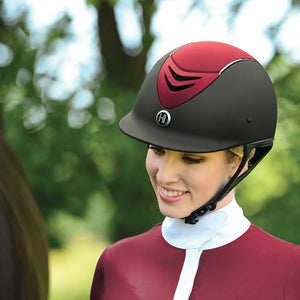


If you've ever picked up your riding helmet, looked it over, and thought, "It still looks brand new," you're not alone.
Maybe you've had it for years. Maybe you only ride on weekends. Maybe it has a few scratches, but nothing serious.
So why do riders keep saying helmets need to be replaced?
It's a fair question, and the answer has very little to do with how your helmet looks on the outside.
One of the hardest things about replacing a riding helmet is that most of the important parts are hidden.
Under the outer shell is a layer of foam that's designed to absorb the force of an impact. Think of it as the part of the helmet that sacrifices itself so your head doesn't have to.
The catch is that the foam isn't designed to bounce back after a significant impact. Even if the shell looks perfectly normal, the helmet may no longer provide the same level of protection. That's why riding organizations and helmet manufacturers recommend replacing a helmet after it has taken a significant hit.
The outside may still look fine. The inside tells a different story.
One of the questions we hear most often is, "But it still looks brand new."
Honestly, some of the oldest helmets we see are the ones that look the best. They were only worn a few weekends a month, carefully stored, and never abused. They're also sometimes eight or ten years old. The materials inside still age, even if the outside looks almost untouched.
A lot of riders think a helmet only needs to be replaced after a serious accident. That’s only part of the story.
Heat, sunlight, sweat, and everyday use slowly break down the materials over time. Even a helmet that has never hit the ground doesn't last forever.
Most manufacturers recommend replacing a regularly used riding helmet every five years. If you're not sure how old yours is, check the label inside. You might be surprised. NOTE: The five year countdown starts when the helmet is purchased
1. You honestly can't remember when you bought it.
If you have to guess whether it's four years old or eight, it's probably time to check the label inside. We recommend you keep the receipt either taped to the inside of the helmet box or in your sock drawer 😂 for safe keeping.
2. It's been in a fall.
Even if you walked away without a scratch. Even if the helmet only touched the ground. Modern helmets are designed to absorb energy during an impact, and that protection may not be visible afterward.
3. It doesn't fit like it used to.
Haircuts change. Padding compresses. Heads don't change much, but helmet liners do. If it rocks, slides, or needs constant adjustment, it's worth being professionally fitted again.
4. It's been living in your truck or car
Leaving a helmet in a hot vehicle day after day isn't recommended, and here in southeastern PA, a July dashboard can get hotter than most people expect. Excessive heat and direct sunlight can shorten a helmet's useful life, so store it somewhere temperature-controlled whenever you can.
5. Safety has improved.
Today's riders have access to features that simply weren't common several years ago: better ventilation, lighter designs, more dial-fit systems, and on many models, technologies such as MIPS that are designed to help reduce certain rotational forces during angled impacts. No helmet can prevent every injury, but many riders appreciate what these newer designs offer.
Not necessarily.
Every ASTM/SEI-certified riding helmet sold in the United States has met a recognized safety standard for equestrian use. That's an important place to start.
Some helmets, particularly imported models, are also certified to additional international standards such as PAS 015, VG1, or other European certifications. Those standards use different testing protocols, and some helmets are designed to meet more than one certification.
What you're often paying for with a higher-priced helmet is a combination of factors:
At the end of the day, the safest helmet is one that fits you correctly, is appropriate for the type of riding you do, and is replaced when it's time.
One of the biggest surprises during a helmet fitting is how different brands fit different head shapes. We've had plenty of riders come in convinced they wanted one particular helmet, only to discover another brand was a much better fit. That's why we always encourage riders to try several styles before making a decision.
If your helmet has been in a fall, is several years old, or simply doesn't fit like it used to, it's worth taking another look.
Replacing a helmet might not be as exciting or fun as buying new boots or a new saddle pad. But if the day ever comes when you need it, you'll be glad you didn't wait one more season.
If you're not sure whether your current helmet is still the right choice, or you just want to compare newer options, stop by Equine Exchange Tack Shop. We'll help you check the fit, explain the differences, and make sure you leave wearing a helmet that's right for you, your riding, and your budget.