

So your child has been taking lessons for a while, their trainer mentioned the word "show," and now you're standing in a tack shop googling "what do kids wear at horse shows" while your kid looks at everything and asks if they can have it all.
Or maybe you're an adult rider who has finally decided to take the leap into the show ring and you're wondering the same thing.
Either way — welcome. You're in the right place.
The good news is that hunter and equitation attire follows a fairly clear set of guidelines. The better news is that once you understand the basics, getting dressed on show morning becomes a lot less stressful.
The slightly complicated news is that some of it depends on your age, your trainer's preference, and the specific show you're attending.
But that's what this is for.
Before we get into the specifics, it helps to know what kind of show you're heading to.
Local schooling shows tend to be more relaxed. The goal is learning and experience, and most show managers understand that newer riders and families are still figuring things out. You're unlikely to be turned away at the gate for a minor attire detail.
Rated shows — those run under USEF rules — are more formal and the standards are more consistently enforced. If you're heading to a rated show, getting the attire right matters more.
The honest advice: Get it right from the start regardless of the show level. It builds good habits, your child will feel more confident, and you won't have to unlearn anything later. And honestly — when your kid looks the part, they tend to ride like it too.
Hunter and equitation attire is divided into two general age groups, and the differences mostly come down to boots, breeches, and hair. Here's what you need for each.
Boots: Paddock boots — black or brown. These are the shorter ankle boots, and they're paired with jodhpurs and garter straps that match the boot color. This is the traditional junior turnout and it's completely appropriate for younger riders.
Breeches: Tan jodhpurs with suede or silicone knee patches. These are full length and worn with the garter straps just below the knee — yes, they matter, and yes, the judges notice if they're missing or crooked.
Belt: Black or brown. Simple, clean, and please don't forget it. You'd be amazed how often the belt gets left on the kitchen counter.
Show Shirt: White, short or long sleeve. The inside of the collar and cuffs can have a color — a little personality is perfectly acceptable here.
Show Coat: Black, navy, or hunter green. It should end just below the hip bone and the sleeves should just cover the wrists when your child's arms are bent. Fit matters here — a coat that's too big or too small is one of the most noticeable things from ringside.
Gloves: Plain black. Yes, they're required. No, the sparkly ones don't count. Save those for another day.
Hair: For riders under 13, hair is worn down in two low braids with bows. The bows can be any color — this is one of the few places a little fun is officially permitted.
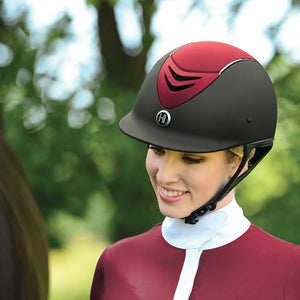
Helmet: Black, well fitted, and it should not move while riding. It can be glossy, matte, or suede finish and is allowed to have glossy, chrome, or rose gold accents. More on helmets in a minute — this one deserves its own section.
Boots: Plain black tall boots, with or without ankle laces. This is the transition that makes most show parents' wallets nervous — and we completely understand. Tall boots are an investment, especially for kids who are still growing. We'll talk about timing in a moment.
Breeches: Tan with suede or silicone knee patches. Full seat or knee patch both work — your trainer will likely have a preference.
Belt: Black or brown. Avoid bright colors. This is not the place for self expression — save that energy for the actual riding.
Show Shirt: Same as the younger group — white, short or long sleeve, colored collar and cuffs are fine.
Show Coat: Same rules — black, navy, or hunter green, proper fit, sleeves just covering the wrists when arms are bent.
Gloves: Plain black. Still required. Still not sparkly.
Hair: Up and in a hairnet that matches your hair color. All of it. Yes, all of it.
If your child has very long, thick, or textured hair that genuinely cannot safely fit inside the helmet, a clean bun at the base of the skull is acceptable. The goal is neat, secure, and safe — not a battle between the hairnet and half a ponytail.
Helmet: Same standards as the younger group — black, well fitted, ASTM/SEI certified. More on this below.
Here's the real talk on tall boots and the age transition.
The general guideline is 13 and over — but trainers will often move taller or more advanced riders into tall boots earlier, even if they haven't technically hit that birthday yet. If your child's trainer is recommending tall boots at 11 or 12, that's not unusual. Follow their guidance and check the rules for the specific shows you're entering.
The cost reality is real. Kids grow. Tall boots are not cheap. A few options worth knowing about:
A boot that fits correctly is safer, more comfortable, and looks infinitely better in the ring than one that gaps at the knee or bunches at the ankle.
This is the one place where we're going to be completely straightforward with you: helmet safety is not negotiable.
At rated shows, helmets must meet current ASTM/SEI certification standards. This isn't a style preference — it's a safety rule and it exists for very good reason.
What to look for:
Helmet technology has come a long way and there are great options at a range of price points. If you're not sure whether your child's current helmet meets current standards or fits correctly, come in for a fitting. It's one of the most important things we do.
Short answer: it depends.
Longer answer: also it depends — but here's the general guidance.
For hunters, a braided tail is traditional and expected at rated shows. It contributes to the overall picture of a polished, well-presented horse and yes, judges notice.
At local schooling shows the standards are more relaxed, and an unbraided tail is unlikely to cost you a ribbon. But again — building good habits early means you're not scrambling to learn braiding the week before your first rated show.
For equitation, the focus is on the rider rather than the horse, so tail braiding is less critical — but a well turned out horse still reflects well on the overall picture.
If braiding isn't in your skill set yet, don't panic. It's learnable, there are great tutorials online, and plenty of barns have someone who braids for a fee on show mornings.
Yes, your white cuffs should show just below the jacket sleeve. About half an inch is the traditional guideline.
Is anyone going to disqualify your child for cuffs that aren't showing? No. Will a well turned out rider with neat, visible cuffs catch the judge's eye for the right reasons? Yes.
The details add up. That's kind of the whole point of hunters.
Not everything on this list is a hard rule — some of it is tradition, and tradition in the hunter/equitation world runs deep.
The honest breakdown:
When in doubt, err on the side of tradition. It's never wrong to be properly turned out.
Navigating show attire for the first time — or the fifth time, honestly — can feel like a lot. Every show is a little different, every trainer has preferences, and the rulebook is not exactly a page turner.
That's what we're here for.
Comment SHOW on our social posts to get a quick checklist of first show essentials, or stop by Equine Exchange Tack Shop in South Coventry for hands-on help with helmet fitting, boot fitting, and show apparel. We'd rather answer your questions in the store than have you guessing in the parking lot on show morning.
Because the goal isn't a perfect turnout on the first try.
It's showing up confident, prepared, and ready to ride.